Offer an easy way in
Choose games with a seated option and let people watch without pressure. A cooperative challenge is often easier to join than an elimination game.
Less rushing. More gathering.
Start with your people and the time you actually have. Then give the celebration enough structure to feel easy—not enough extras to become another job.

Before choosing a theme, ask the birthday person what would make the day feel like theirs. A small meal, an afternoon of games or a lively garden gathering can all be right. The useful question is not “How much can we fit in?” but “What can we host comfortably?”
Write down the likely guest count, ages, access needs and available helpers. Include siblings and accompanying adults in the headcount. Ask privately about food requirements and practical support rather than expecting guests to announce them in a group chat.
Short activities, simple themes and room for different energy levels.
Route twoBuild around conversation, shared interests and an honest workload.
Route threeConnect the guest list, venue, invitations and preparation checklist.
Route fourPlan a welcoming arrival, manageable menu and flexible running order.
Choose a spending ceiling before browsing decorations. Keep a small amount unassigned for genuine necessities. Compare spaces by the whole hosting task, not just the booking fee: travel, seating, toilets, food rules, cleanup and an indoor weather alternative all matter.
A home gathering is not automatically cheaper if you need to hire furniture. A community hall is not automatically easier if every item must be carried in and removed immediately afterwards.
Compare venue needs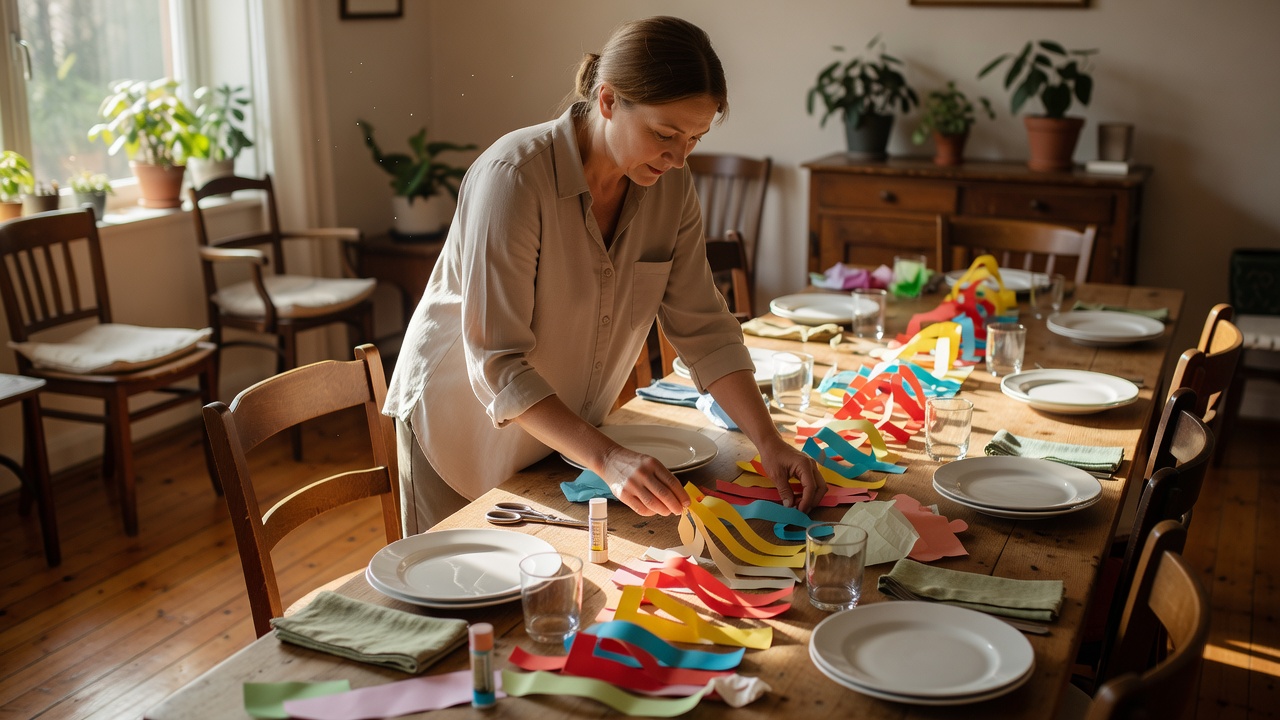
Use one interest, two colours and a single focal area. For children, a nature trail or art table can provide both the theme and the activity. For adults, a listening party, shared lunch or board-game afternoon gives guests something to enjoy without a dress code.
Decorate where guests will actually gather. Keep walking routes clear, avoid low-hanging strings and leave table space for plates. Reusable bunting and a handwritten birthday sign can feel personal without creating a late-night craft marathon.
Explore children’s themesAn invitation is a small piece of logistics. Include the date, start and finish time, location, RSVP method and deadline. Say whether a meal is served, whether adults should stay with children, and how guests can share access or dietary needs privately.
“Please join us to celebrate [name] on [date], from [start] to [finish], at [location]. We’ll share [meal or snacks] and [activity]. Please reply to [contact] by [date], and let us know privately about any dietary or access needs. [Adult supervision or travel detail].”
Choose games with a seated option and let people watch without pressure. A cooperative challenge is often easier to join than an elimination game.
Keep ingredient information available and ask before assuming a dish is suitable. Separate utensils help, but they do not guarantee an allergen-free meal.
Provide water, ordinary seating and a quieter spot. Keep music low enough for conversation and explain any sudden changes before they happen.
Imagine a guest arriving, finding somewhere for their coat, getting a drink, joining an activity and leaving. Each transition should have one simple answer. Put food preparation before decoration; put safety and access checks before both.
A running order is a guide, not a test. If guests are happily talking or children need a break, let the plan bend.